

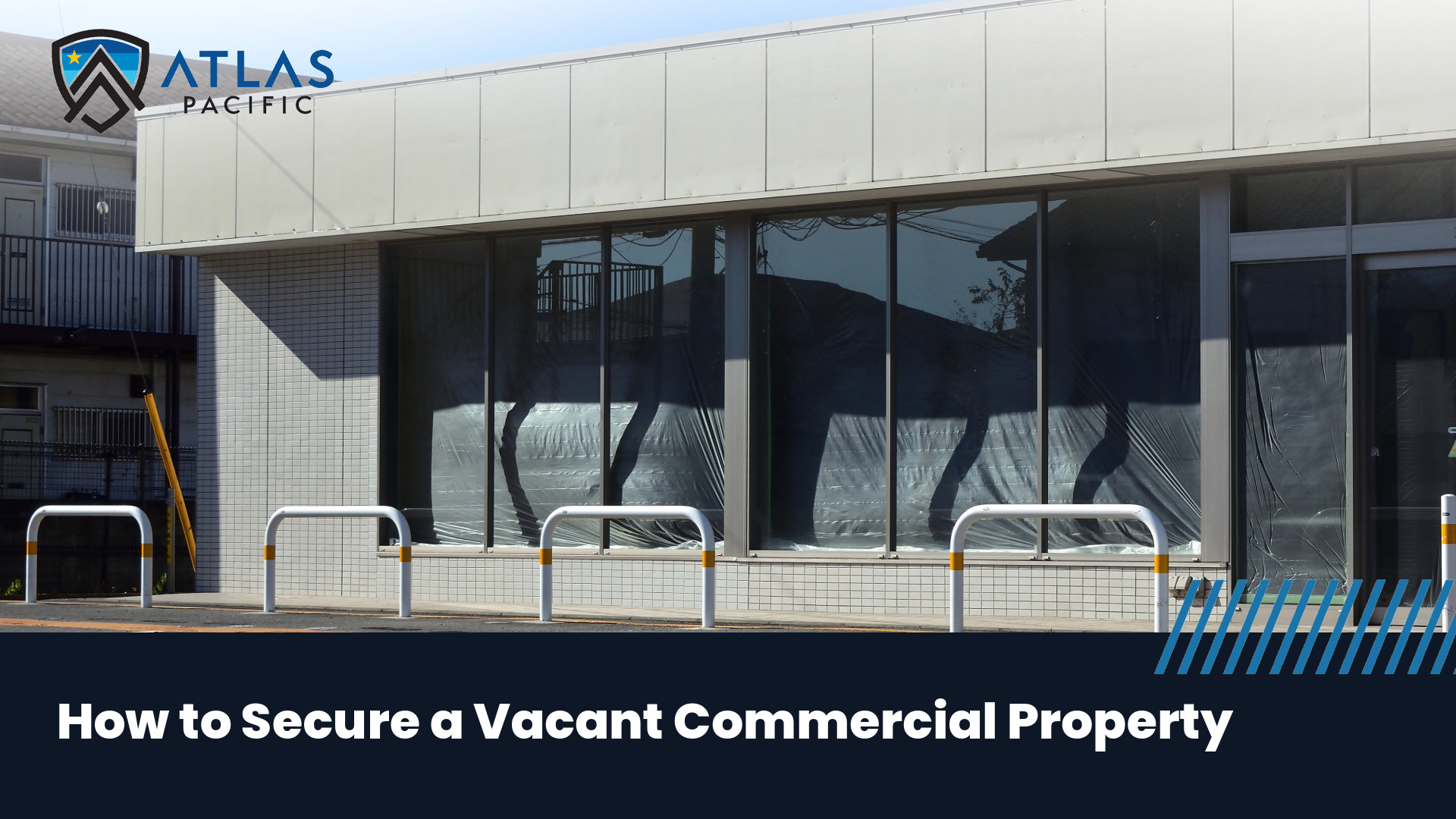
Nothing attracts unwanted attention like a vacant commercial building. Property owners can’t just hope for the best as they prep the space for the next tenant - they need a plan to deter trespassing, vandalism, theft, unauthorized occupancy, and property damage. At Atlas Pacific Security, we know that a layered security strategy is key to securing a vacant commercial property during the weeks or months between tenants.
How Do You Secure a Vacant Commercial Property?
Securing a vacant commercial property involves controlling access points, maintaining exterior lighting, removing valuables, using monitored cameras and alarms, scheduling security patrols, and regularly inspecting the property. This combination of physical security measures and remote monitoring gives property owners greater visibility and helps them respond quickly to suspicious activity.
Why Do Vacant Commercial Properties Need Extra Security?
When commercial properties are occupied, they’re filled with activity. Employees, customers, maintenance teams, and tenants come and go throughout the day, so issues like broken windows, damaged locks, and unfamiliar vehicles are noticed quickly.
Once a tenant moves out, however, all that built-in oversight disappears. Empty parking lots, dark windows, limited foot traffic, and long stretches without occupants make unauthorized activity harder to detect. That means the security measures that worked when the building was occupied are no longer enough, and it’s time to reassess your security plan.
What Should You Check When a Tenant Moves Out?
Start with a complete security inspection as soon as the tenant leaves. Walk the interior and exterior of your property, paying particular attention to the entrances the former tenant used, but also checking for:
- Exterior doors and locks
- Windows and other potential entry points
- Loading docks and service entrances
- Gates and perimeter fencing
- Parking lots and structures
- Exterior lighting
- Security cameras and alarm equipment
- Roof or utility access points
- Storage rooms and mechanical areas
- Landscaping that obstructs visibility
We also recommend updating access credentials and confirming that former employees, contractors, vendors, and other third parties no longer have access to the building.
How Can Access Control Help Secure a Vacant Commercial Property?
While your property is between tenants, you may need to provide access to leasing agents, maintenance workers, contractors, cleaners, inspectors, utility workers, and prospective tenants. There should be a clear procedure for these visits.
Keep an up-to-date list of authorized personnel, enforce approved access hours, and document credentials such as keys, cards, and codes. Property owners should also know when to expect contractors and which areas they need access to.
Establishing strong access controls makes unusual activity easier to spot. If someone enters the building outside of approved hours or accesses a restricted area, your security team has better information to evaluate the situation.
Why Does Exterior Lighting Make a Difference for Protecting Vacant Property?
Don’t let an empty building turn into a dark building. Good visibility helps cameras capture clearer footage and gives security officers a better view during patrols.
We’ve found that owners often cut back on lighting and other building operations to save money during a vacancy. However, they need to consider how that decision affects security around the property.
We recommend keeping entrances, walkways, parking areas, loading docks, alleys, and other vulnerable areas well-lit to help secure a vacant commercial property. Also, replace burned-out bulbs quickly and trim any landscaping that blocks lights or creates concealed areas around doors and windows.
How Can Remote Video Monitoring Protect a Vacant Property?
Remote monitoring helps secure a vacant commercial property by simultaneously focusing on vulnerable areas like:
- Main entrances and exits
- Parking lots
- Loading docks
- Fenced areas and gates
- Rear entrances and alleys
- Equipment or material storage areas
At Atlas Pacific Security, we use remote monitoring to distinguish legitimate activity from potential threats. Our AIIRE system combines AI-powered video analytics with human verification. The technology monitors multiple areas and alerts trained monitoring specialists to potential suspicious activity. If the situation is deemed credible, personnel can then use lights, sirens, live talk-down capabilities, or dispatch uniformed officers as appropriate.
Should You Use Security Patrols at a Vacant Commercial Property?
Mobile security patrols add a physical presence that signals that, while the property may be vacant, it’s still being monitored. Patrol officers can also inspect areas that aren’t fully covered by cameras or alarm systems. Depending on the site, officers can check doors, windows, gates, parking areas, loading zones, and exterior lighting.
We recommend implementing a patrol frequency that meets the property’s risk level. For example, a large warehouse with valuable equipment and a history of trespassing issues needs stronger coverage than a small vacant office suite within an active commercial complex.
How Can You Make a Vacant Property Look Actively Managed?
Visible neglect screams vacancy. Overflowing trash, damaged signs, overgrown landscaping, accumulated mail, broken lights, graffiti, and neglected damage signal that no one is regularly checking the property. That’s why maintaining the building’s exterior is an essential step to secure a vacant commercial property, even when there’s no tenant. Schedule landscaping, remove trash, promptly repair damage, and keep exterior areas orderly.
Security teams should also document any new damage or suspicious changes they see during patrols. A newly opened access point, a broken lock, a damaged fence, or a moved barrier may be a sign that someone has tested the property’s security.
What Should You Remove From a Vacant Commercial Building?
Don’t leave valuables behind. Remove portable electronics, tools, leftover inventory, sensitive documents, expensive equipment, and other assets from the property. If equipment must stay on-site, keep it secured in a restricted area that’s away from windows. Consider whether exterior materials, HVAC components, wiring, or other building systems could also be targets of theft.
We recommend taking photographs and maintaining an inventory of your on-site assets. Good documentation makes it easier to identify missing or damaged property following an incident.
How Often Should You Inspect a Vacant Commercial Property?
With regular inspections, you can catch small problems before they turn into big issues. The right inspection frequency, though, depends on the building, location, insurance requirements, vacancy duration, previous incidents, and other property-specific risks.
Regardless of cadence, make sure each inspection checks for signs of:
- Forced entry
- Vandalism
- Water
- Damaged locks
- Broken windows
- Unauthorized vehicles
- Dumped materials
- Graffiti
- Utility problems
Keep a written record of these inspections. Photos, timestamps, incident reports, and patrol documentation create a useful history of activity at the property.
Should You Secure A Vacant Commercial Property with Both Security Officers and Remote Monitoring?
A layered security approach provides broader coverage than relying on a single security measure. Remote monitoring continuously watches multiple designated areas, while security officers provide an on-site presence when a situation warrants a physical intervention.
For example, cameras can watch entrances, parking lots, and loading areas throughout the night. Monitoring specialists can then verify any suspicious activity and determine the appropriate response. If the situation requires an on-site presence, a security officer can respond.
We’ve found this hybrid strategy works especially well at properties with large areas to monitor, multiple access points, valuable assets, recurring after-hours activity, or a need for rapid physical response.
When Should You Update Your Vacant Property Security Plan?
What’s required to secure a vacant commercial property can change quickly. It’s a good idea to review your security strategy whenever those changes occur.
- A tenant moving out
- A vacancy lasting longer than expected
- Construction or renovation beginning
- Valuable equipment arriving on-site
- A break-in, trespassing incident, or vandalism
- Changes to neighboring properties
- A new tenant beginning build-out work
- Changes to doors, fencing, landscaping, or access points
Review the property again as the next tenant prepares to move in. Construction crews, deliveries, vendors, and new employees can dramatically alter normal activity around the site, and your security procedures should adapt accordingly
Protect Your Vacant Commercial Property With Atlas Pacific Security
The stretch between tenants doesn’t have to create a gap in your property’s protection. When you secure a vacant commercial property with strong access controls, lighting, remote monitoring, routine inspections, and professional security patrols, you create multiple layers of security that help deter unauthorized activity and identify potential problems faster.
At Atlas Pacific Security, our experienced team provides commercial security solutions throughout Portland, Vancouver, and the greater PDX area. We use mobile patrols, on-site security officers, alarm response, remote monitoring, and AI-powered security technology to build a customized protection plan for your property. Contact us today for a free quote.
Frequently Asked Questions
What is the best way to secure a vacant commercial property?
The best approach combines multiple security measures, including controlled access, exterior lighting, monitored security cameras, alarm systems, routine inspections, and professional security patrols. A layered security plan helps property owners detect suspicious activity quickly and reduces the opportunity for trespassing, theft, vandalism, and property damage.
Should you change the locks when a commercial tenant moves out?
Property owners should review and update access credentials after a tenant leaves. That may include changing locks, collecting keys, disabling access cards, and updating keypad or alarm codes. Removing outdated credentials helps prevent former employees, contractors, vendors, or other unauthorized individuals from accessing the vacant property.
What are the biggest security risks for vacant commercial properties?
Common risks are trespassing, vandalism, theft, unauthorized occupancy, property damage, illegal dumping, and unnoticed maintenance problems. Reduced foot traffic and fewer employees on-site can allow suspicious activity to continue longer before someone notices it.

